Compost Pails — a great way to collect nitrogen rich composting materials from the kitchen.

The key to a successful compost pile is made up of many factors, but one of the most important factors is a proper balance between Carbon and Nitrogen – rich materials. Having a proper balance between the two will result in some of the best “black gold” you could ever hope for.

Carbon-rich materials can be found in the household, or around the yard. These items include things such as leaves, woodchips, newspaper, cereal, and sawdust. To balance out the Carbon rich materials and aid in faster decomposition in the compost process, you need to make sure there are plenty of Nitrogen rich materials as well. The best place to find Nitrogen rich materials will be in food scraps – such as fruit and vegetable trimmings. That’s right, everyday household food items such as bananas, pears, potatoes, carrots, and more will be excellent for your compost pile.

So that brings us to a compost pail. These are excellent ways to help collect Nitrogen rich materials for your compost heap. By using a compost pail and keeping it in the kitchen, you can toss your excess food scraps and fruit and vegetable peelings in the pail. For example, if you are cooking and are peeling potatoes, just rifle all the excess potato peelings into the compost pail instead of the garbage disposal. Every few days or so, just take the compost pail out to the pile and empty it. It’s that simple.

These pails also come in a variety of colors – from black, white, red, to even stainless steel and bamboo. This means that there is most certainly one that will fit the overall décor of your kitchen. So from an aesthetic aspect, you are as good as gold. If you are worried about a potential smell, have no fear – these compost pails typically come with a carbon or charcoal filter that will suppress and eliminate any chance of an odor. These filters only need to be replaced every 3-4 months, and replacement filters can be purchased separately.

A compost pail is nice because not only will it help you remember to collect those Nitrogen-rich materials with ease and frequently, but it will also add in less trips outside to the compost pile. This way, you only have to go there every few days instead of every single time you need to throw some food scraps in the pile. Give a compost pail a try, it will be essential to happy composting, and you will wonder how you ever lived without one.
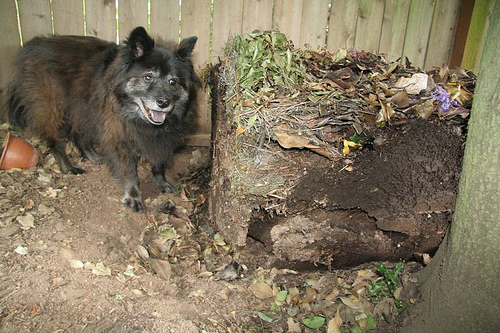
Compost, an organic way to improve your soil


Photo found on Flickr.com courtesy of Jan Van Ray.

Compost is a natural, organic way to improve the quality and fertility of your soil. It is rich in nutrients, and really has many outstanding effects. It is essentially a way to enrich your soil in a natural way. By combining Carbon and Nitrogen rich materials to make compost, you can easily return the following back to the soil:

  • Phosphorus
  • Potassium
  • Nitrogen
  • By using compost, soil aeration also sees improvement. The compost is essentially an organic fertilizer and mulch that will also help protect your plant roots from damage caused by water and the sun, and also can reduce soil diseases. The main and undeniable reason for all of these benefits of compost is because it is a simple mulch made from organic material without the use of pesticides or any other man made material. It is a totally organic way to improve the quality of the soil in your yard.

    Here are some other great benefits of compost, as described by the US Environmental Protection Agency.

    Did You Know That Compost Can…

    * Suppress plant diseases and pests.
    * Reduce or eliminate the need for chemical fertilizers.
    * Promote higher yields of agricultural crops.
    * Facilitate reforestation, wetlands restoration, and habitat revitalization efforts by amending contaminated, compacted, and marginal soils.
    * Cost-effectively remediate soils contaminated by hazardous waste.
    * Remove solids, oil, grease, and heavy metals from stormwater runoff.
    * Capture and destroy 99.6 percent of industrial volatile organic chemicals (VOCs) in contaminated air.
    * Provide cost savings of at least 50 percent over conventional soil, water, and air pollution remediation technologies, where applicable.

    How to choose a Composting Bin

    When choosing a compost bin, you are typically faced with a few different options. For starters, there are multiple styles of composting bins. You may find yourself choosing from between any of the following options:

    Tumbling Compost Bin

    Photo found on Flickr.com courtesy of Tammy Leino.

    Spinning a tumbling compost bin daily can often produce compost in as quickly as 21 days. These bins are also typically above ground, so they are resistant to attacks by pests and animals.

    Stationary Compost Bin


    Photo found on Flickr.com courtesy of Clean Air Gardening.

    Stationary Compost Bins will typically sit in one area of the yard and can vary in size. However, they are excellent if you need to yield a large amount of compost, and are generally properly aerated. It can at times, take longer for materials to break down.

    Worm Compost Bin (aka Vermicomposter)

    Image found on Flickr.com courtesy of Colonel Mustard.

    A worm compost bin is just what it sounds like – it makes use of worms to aid in the breakdown of organic material into compost. Waste is typically broken down quickly with these bins, and is great for producing compost tea – a liquid substance that occurs naturally when producing compost that is high in nutrients and really good for your garden.

    Multi-Bin System

    A multi – bin system is choice if you have a lot of composting to do, or desire do to composting continually over time. You can have different stages of compost in each bin, and in the end come out with a lot of compost for your lawn or garden.

    Once you have spent some quality time looking at the different styles of compost bins, there might be some additional questions or considerations. For example:

    How much compost do I need to create?

    This all depends on your composting needs. For example, if you are going to be working constantly with a large surface area and are going to require large amounts of compost for your garden, then something such as a multi-bin system may be perfect for you.

    What material will I be composting?

    Obviously, there are certain things you shouldn’t compost (animal fat, for instance). However, if you are composting a lot of vegetables with some leaves and grass, then it may make sense to purchase a tumbling compost bin or a stationary compost bin – something with easy access from the kitchen in the backyard that can get regular use.

    What is the space/surface area I am working with?

    This is also an important question to ask, because it can basically determine the size of your bin. If you are working with a smaller surface area, then a large compost bin is not going to make sense.

    Other points of interest

    It is vital that no matter what the compost bin or style you feel is right for you, it is properly aerated and has a hole large enough for you to get your compost out of. In addition, your bin should be something that is convenient for you – something that you can get to and from easily, and that will be practical for all of your gardening needs. If possible, try and obtain a compost bin that will be above ground and resistant to rodents, so your compost can decompose quickly and efficiently.