Why a bin might be better than a compost heap.

Should I have a compost bin or a compost heap in the backyard? This is a question that often plagues the first time composter, or even the experienced composter who is going to start a new composting season. Well, to figure this out, you really have to examine the two. First, let’s get a basic idea of each:

Compost Heap

A compost heap is just what it sounds like – a heap of compost that lies on the ground. You can turn it, aerate it, and add to it while it decomposes. The compost heap can at times be covered with a tarp in order to lock in heat and control moisture, or it can just sit there uncovered – decomposing away.
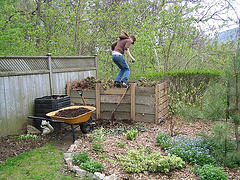
Photo found on Flickr.com courtesy of Gillian.

Compost Bin

A compost bin is just that – a bin for your compost. These bins can come in varying systems – you can make them yourself, you can buy a wooden one, a multi-bin system, a rotating composter, a tumbling composter – you name it. The point is that these bins do not rest on the ground and are still holding cells for your compost.

Photo found on Flickr.com courtesy of Randzig.

So, those discrepancies pointed out, why might a bin be better than a heap?

Well, first off…you should always check with your city to see if there is an ordinance prohibiting compost heaps. Some cities say the big nay-no to a compost heap. If your city says its okay and you have a homeowner’s association, you still may want to check with them. Let’s just say that some homeowner’s associations can be less than fond of a compost heap in the backyard.

So, taking that into account, let’s also think about other possible benefits of a compost bin – they are often closed and above ground, which means they are resistant to being torn up by rodents and animals. Organic wasted confined to one part of the lawn is one thing – but decomposing material strewn about the entire lawn is a whole other story altogether.

Compost bins are also convenient. You can carry waste to the bin, close a lid and tumble it (if it’s a tumbling composter) or spread it around (with a compost turner or a compost fork). The compost bin will also last for a long time, and can be a lot more aesthetically pleasing. In addition, compost bins can at times yield quicker compost, and if you have a smaller yard or are working with a smaller need for compost, they are absolutely perfect.

So, when you take these points into consideration, a compost bin might be a lot more practical and effective for your home than a compost heap.
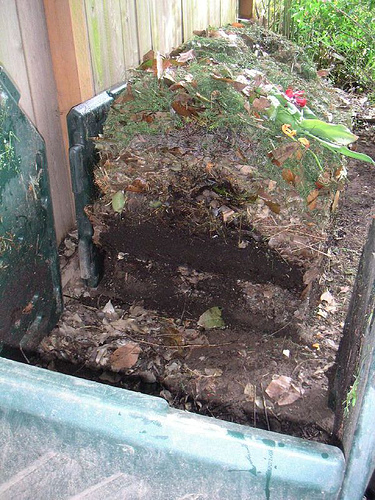
Making your own Homemade Compost

Photo courtesy of Jan Van Raay at Flickr.com.

Synthetic fertilizer is made from petroleum and it poses a triple threat to the environment. When oil is extracted, processed, and transported, it produces greenhouse gases. Synthetic fertilizer also is unstable and will release additional gasses as it breaks down. Finally, synthetic fertilizer washes away when it rains, contaminating rivers, lakes, and bays with nutrients that can cause algal blooms.

Instead of using synthetic fertilizer, you can improve the health of your garden with home made compost. There are plenty of ways to make earth friendly fertilizer by composting your food scraps, and doing so also cuts down on the amount of gas that the garbage truck burns. Instead of throwing valuable nutrients into the landfill, change your habits and save a few bucks too!

Compost can be made in several different ways. You can use a compost pile, compost trenches, a composter, or a worm bin. Each of these methods produces humus that can be used around the yard. Humus is well balanced soil that contains an ideal mix of nutrients, retains water better than depleted topsoil, and has a rich, healthy color. Humus is also gentle on young plants, because it’s easy for their roots to burrow through.

A compost pile is one of the oldest ways to make compost. Simply stack together branches, twigs, grass clippings, and kitchen scraps in a clearing in your yard. Every couple weeks, take a spade or pitchfork and stir the contents together. Fresh ingredients can be stacked on top of the pile, and finished compost will settle to the bottom.

Compost trenches offer similar results with lower maintenance. When you have a big pile of kitchen scraps, simply dig a deep hole in the ground and bury the organic waste. A 4-6 foot deep hole is about the right depth. Shallow trenches are also useful, but they can attract unwanted animals like possums, skunks, and rodents. Shallow trenches are also a bad idea in certain areas because they stink.

Enclosed composters give a great deal of control over compost and they offer protection from the weather as well as small animals. Compost bins are available in various styles. Tumbling models will aerate the compost for you, while stationary models require turning in the same way that compost piles do. Composting bins can accelerate the decomposition process because they offer insulation and they compress compost ingredients into a small space where the heat that bacteria produce will build up. Finally, when the compost is finished, enclosed composters make it easy to transport humus by rolling or pushing the bin to the spot where it’s needed.

Vermicomposting bins are a unique variation on compost bins. They use small animals such as worms or grubs to break compost down into soil. As the animals eat scraps, they will digest them into soil and use the energy to breed.

No matter which method you choose to produce compost, this natural fertilizer is a great alternative to chemical fertilizer. By composting organic waste, you can make your slice of the world a healthier, more natural place to live!


Photo courtesy of duckiemonster at Flickr.com.

Add Manure to your Compost? What kinds are okay?

Photo courtesy of seawallrunner at Flickr.com.

When disposing of manure, composting is a quick and efficient way to get rid of the mess. Each type of manure should be treated differently though. Manure from herbivores has very different types of bacteria than manure from omnivores and predators. If you raise cattle or sheep, their manure has very few pathogens and can be composted easily. Droppings from cats or dogs require special treatment, and they should only be handled with protective gear such as gloves and face masks.

Cow patties make a great compost starter for compost piles or composters. Manure from sheep, cows, rabbits, llamas, goats, hamsters, and similar animals is a “green” compost – high in nitrogen and aerobic bacteria. This type of manure should be stirred into compost heaps and added when turning compost piles. It makes a great accelerant, but should be balanced with carbon rich compost to avoid overheating.

Horse manure is a unique case, because horses love to eat wildflowers and weeds but they don’t have a particularly efficient stomach system. Often, the seeds of these weeds will pass through the horse intact, and they can grow from horse droppings. Horse patties can be used in compost just like other plant eater’s manure, but they should only be used in situations where the compost pile reaches gets hot enough to sterilize the seeds. That requires sustained temperatures in the 140-160 degree range (anything cooler than that and the seeds will survive, anything hotter than that and there’s a risk of spontaneous combustion). Horse manure can also be used in worm bins, because worms will eat the seeds and prevent germination.

Waste from meat eating animals should not be mixed with food scraps. Poop from cats, dogs, lizards, and snakes is often contaminated with harmful bacteria such as e coli. Not only are pet droppings unhealthy to touch, but these bacteria can interfere with proper decomposition in a compost pile. Stomach bacteria are generally anaerobic, and they work using slower mechanisms than aerobic bacteria. Anaerobes can also linger in the soil, where they attack the roots of plants and contaminate food grown in that area.


Photo courtesy of uncene at Flickr.com.