Composting Info: Is Compost Combustable? Answers.

Often, we get composting related questions. In this video, Lars answers a question from a reader in Austin, TX who asked:

I purchased a rectangular, black, plastic, compost bin but there were no instructions regarding how often I need to “turn” the compost. I live in Austin, TX, so I’m concerned about the combustibility of the contents during the hot summer months. Any tips?
Thanks!

What a great question!

First things first, how often you turn the compost is really up to you. If you want to be an active composter, you might want to turn your compost about every 3 days or whenever you take stuff out to the bin. You can mix your compost tool up with a pitchfork or even a specialized compost turning tool. There’s no right or wrong answer, because everything will break down over time.

As far as combustibility is concerned, there shouldn’t be a problem. As far as compost spontaneously combusting is concerned, that’s usually in regards to more of a municipal scale – for example to where you may have 5 yards by 5 yards of material piled really high. You probably won’t get temperatures over 120 or 130 degrees in the middle of your compost bin. In fact, in Austin, you may have more of a worry of your compost drying out. If this happens, you can always take the lid off when it rains, or you can add some water in there. Remember, you want your compost to have the texture, dampness, and feel of a rung-out sponge.

Hope this answers your question, thanks for reading!
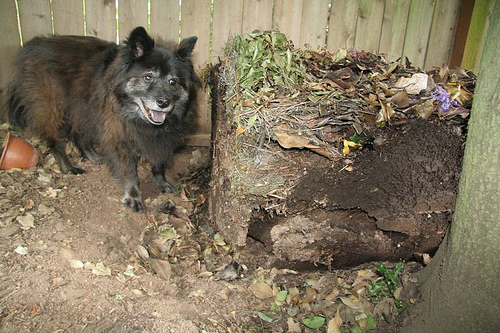
Compost, an organic way to improve your soil


Photo found on Flickr.com courtesy of Jan Van Ray.

Compost is a natural, organic way to improve the quality and fertility of your soil. It is rich in nutrients, and really has many outstanding effects. It is essentially a way to enrich your soil in a natural way. By combining Carbon and Nitrogen rich materials to make compost, you can easily return the following back to the soil:

  • Phosphorus
  • Potassium
  • Nitrogen
  • By using compost, soil aeration also sees improvement. The compost is essentially an organic fertilizer and mulch that will also help protect your plant roots from damage caused by water and the sun, and also can reduce soil diseases. The main and undeniable reason for all of these benefits of compost is because it is a simple mulch made from organic material without the use of pesticides or any other man made material. It is a totally organic way to improve the quality of the soil in your yard.

    Here are some other great benefits of compost, as described by the US Environmental Protection Agency.

    Did You Know That Compost Can…

    * Suppress plant diseases and pests.
    * Reduce or eliminate the need for chemical fertilizers.
    * Promote higher yields of agricultural crops.
    * Facilitate reforestation, wetlands restoration, and habitat revitalization efforts by amending contaminated, compacted, and marginal soils.
    * Cost-effectively remediate soils contaminated by hazardous waste.
    * Remove solids, oil, grease, and heavy metals from stormwater runoff.
    * Capture and destroy 99.6 percent of industrial volatile organic chemicals (VOCs) in contaminated air.
    * Provide cost savings of at least 50 percent over conventional soil, water, and air pollution remediation technologies, where applicable.

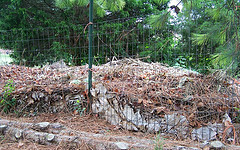
    Compost Piles: Check your local ordinances to see if they are allowed

    Photo found on Flickr.com courtesy of Blackstarjewelry.

    A compost pile is just simply what the name implies: a pile of compost that may or may not be covered with a tarp that sits on your lawn and decomposes until it is sweet, rich, compost ready for your lawn or garden.

    However, some cities do not allow compost piles because they can be unsightly, and they can attract pests if they are not constructed and maintained correctly. So you may have to check your local city ordinances to see if a compost pile is kosher with the city (or in some cases, your homeowner’s association if you have one).

    If a compost pile is allowed and you still desire to create one then great – you are in the money. If one is not allowed or if you are considering other viable options – a compost bin may be right up your alley.

    Photo found on Flickr.com courtesy of TroyJunkinStuff.

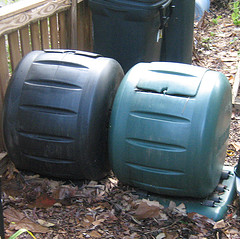
    There are numerous styles and types of compost bins – from tumbling compost bins, to recycled plastic compost bins, to homemade compost bins, to even multi-bin systems that can fit with ease in your backyard. These are amazing and very helpful, because they can still get the job done with ease. If your city has an ordinance pertaining to compost piles in your yard, having a bin can essentially bypass said ordinance, but still allow you to produce rich compost for your lawn.

    It is also good for your lawn and for the prevention of pests. For example, a compost pile generally sits right on the lawn, which means there is just going to be an area of your lawn which is not being used for normal purposes. By using a compost bin, everything is nice and neat in a corner of the lawn of your choosing, and the vast majority of them are above ground. This means that animals, insects, and other pests cannot inhabit them, ensuring that your compost is as “good as black gold.”

    So do not fret if your city ordinance does not allow a compost pile – with a compost bin, perfect compost is still highly attainable for your lawn, crops, and garden.

    Don’t miss our other post about how to make a compost pile.